
Photobiomodulation devices · General wellness
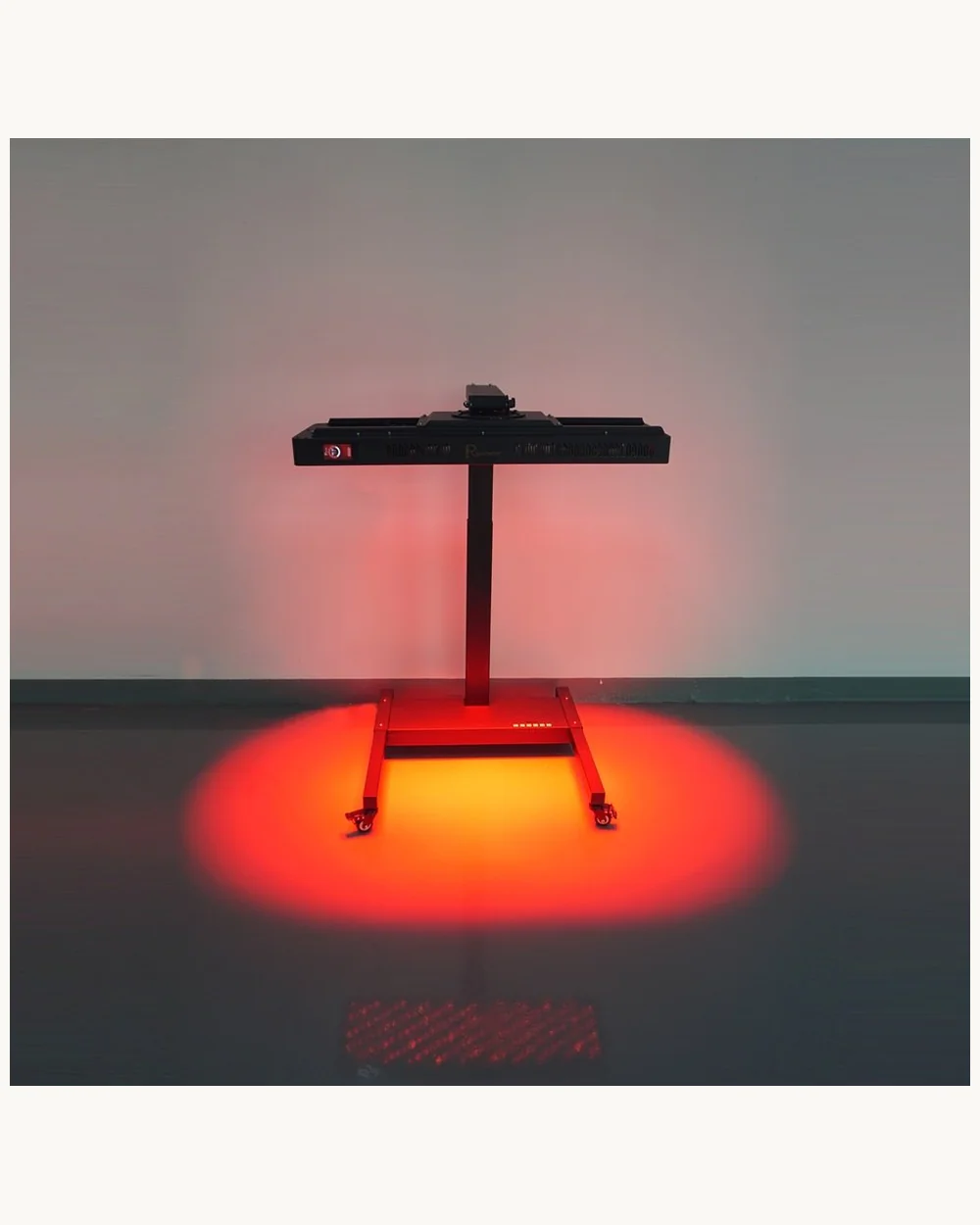
Most panels ship one or two wavelengths. The Rinnovare™ panels carry eight, spanning visible red through near-infrared. Below: the full spectrum, the specifications, and a straight account of where the research is solid and where it is not.
Visible red at 610–660 nm; near-infrared from 810 nm upward, shown darker because it is outside the visible range.
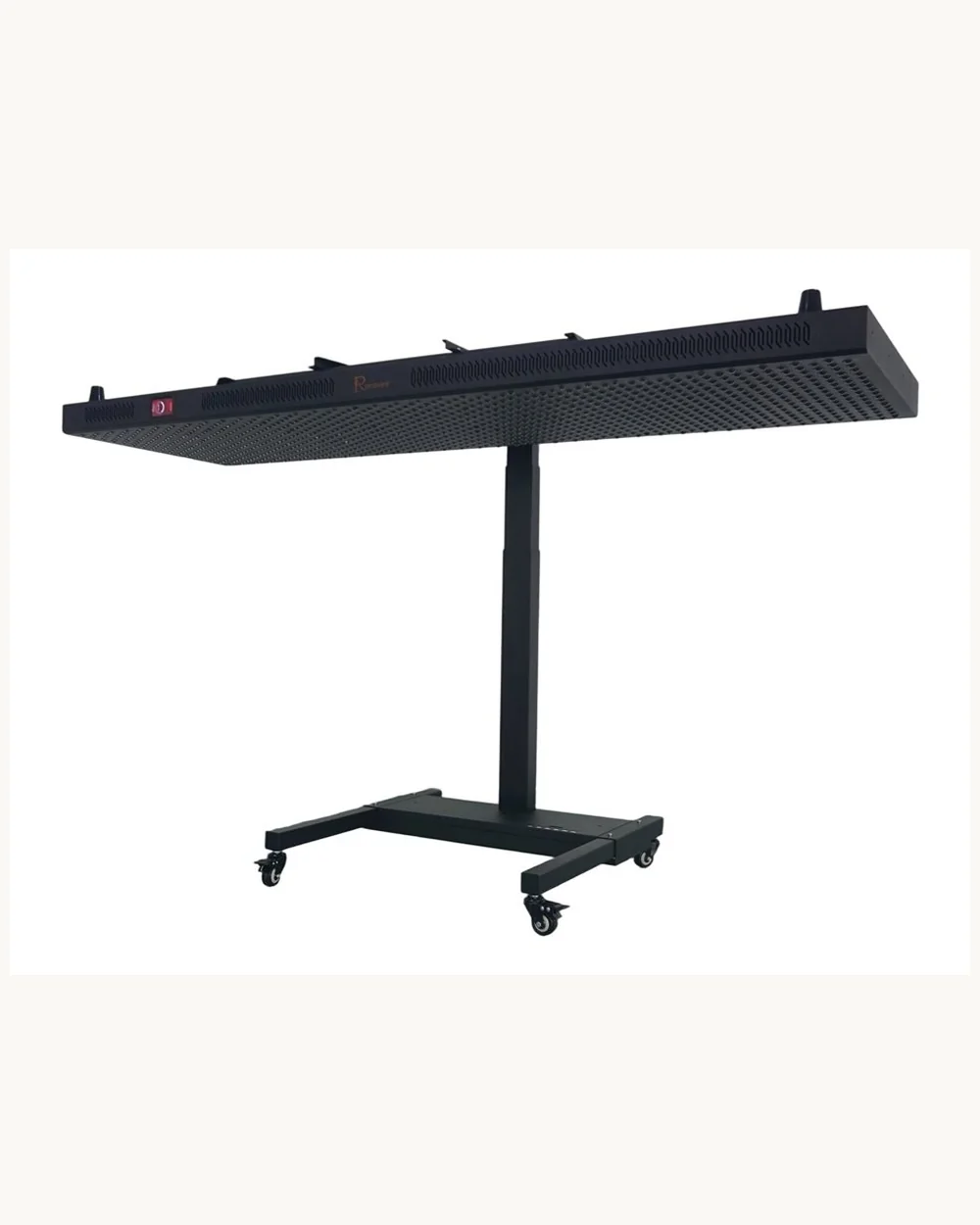
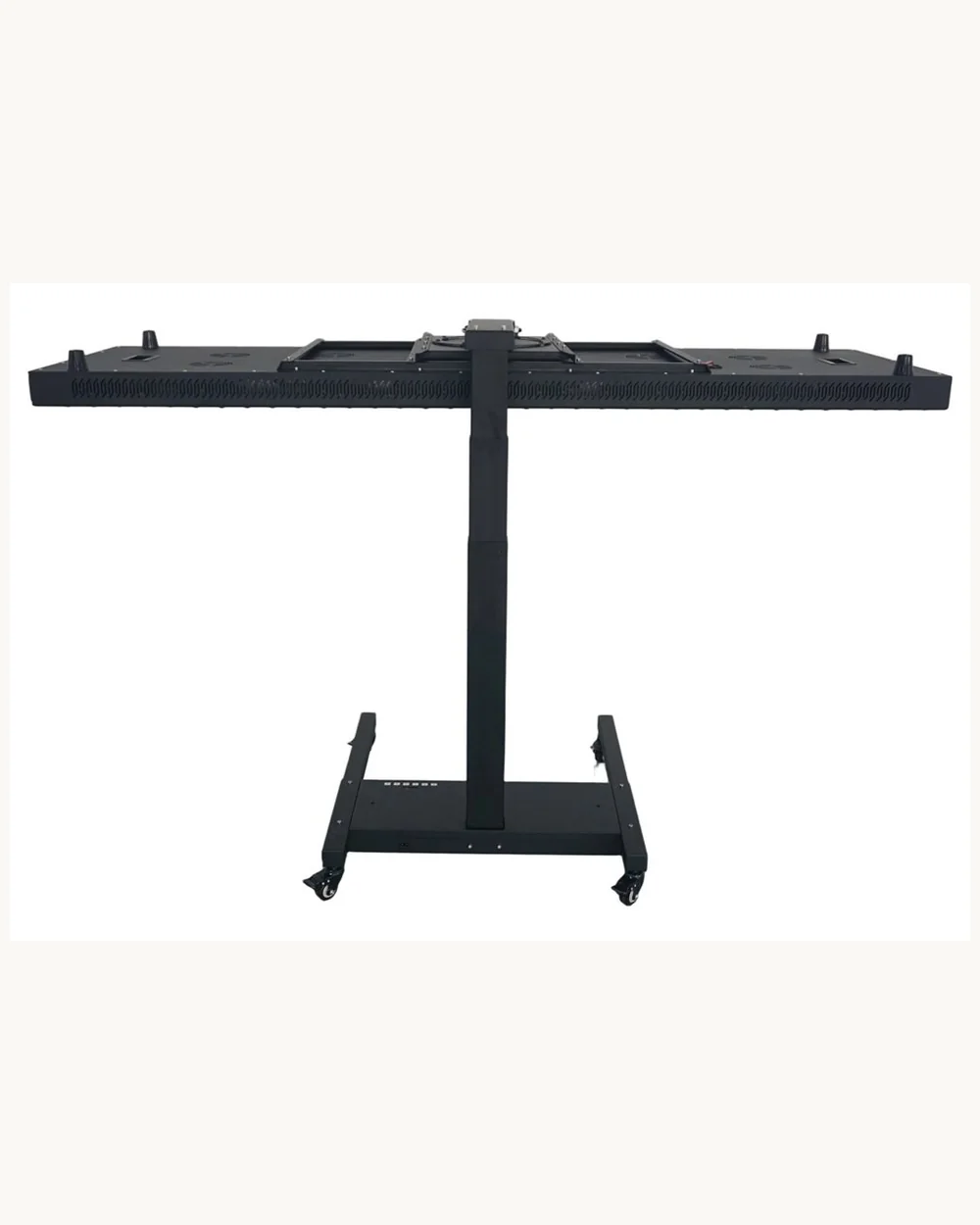
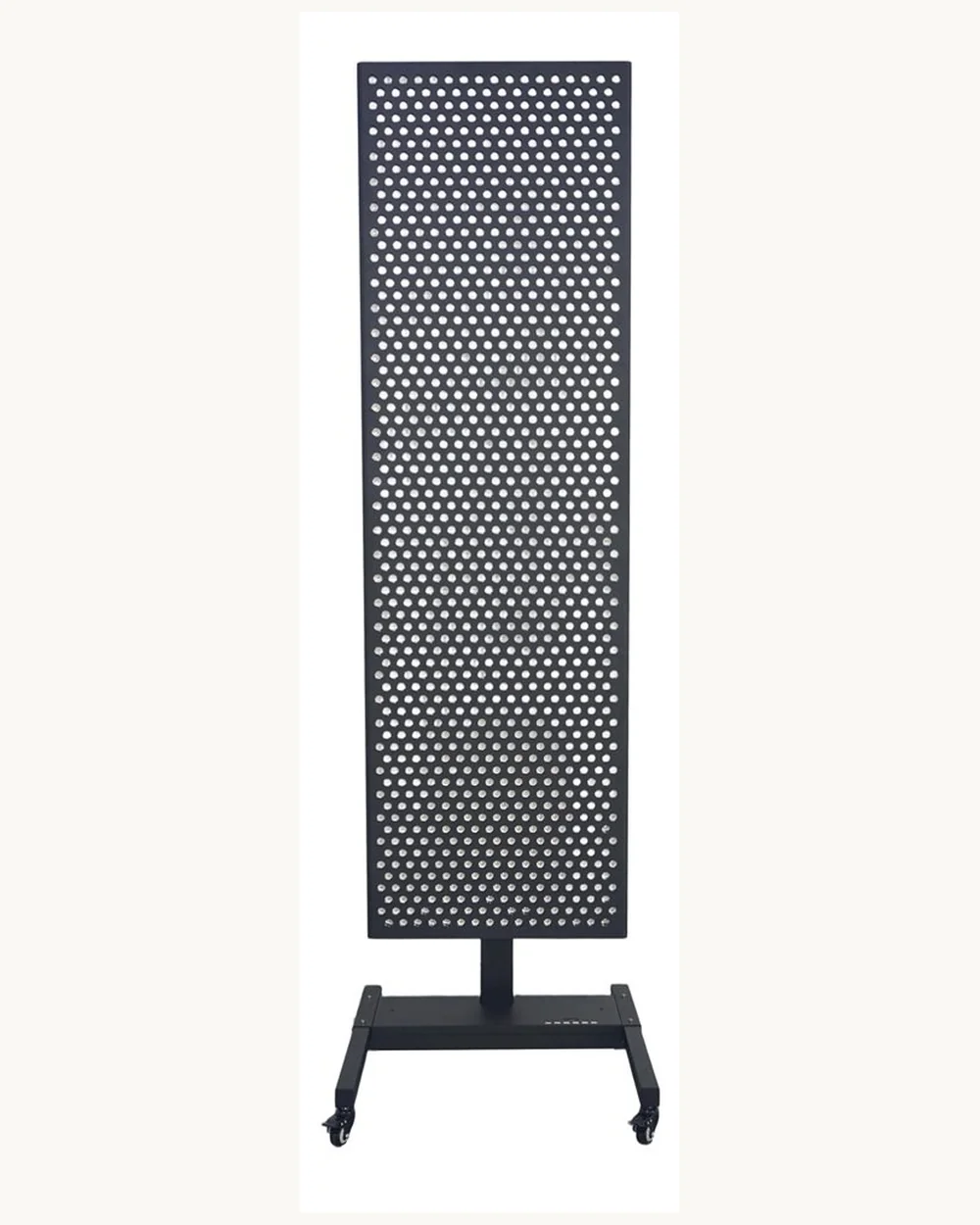
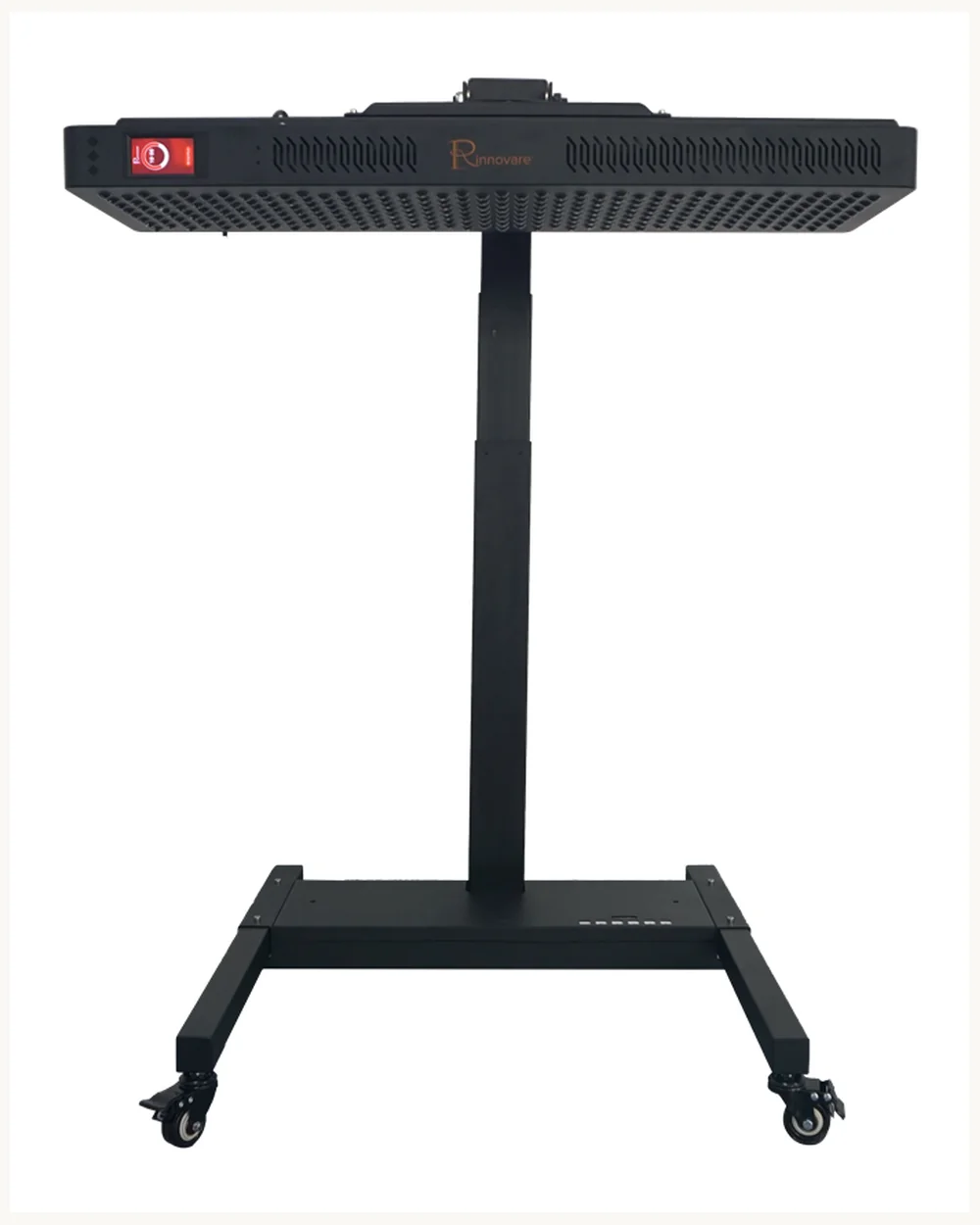
R-1000
Full-body coverage in a single session. $9,995.99. Flexible financing available through Brickhouse Capital.
| Specification | Measured |
|---|---|
| Wavelengths | 610 · 630 · 660 · 810 · 830 · 850 · 940 · 1060 nm |
| LEDs | 1,155 single and double-core |
| Power draw | 540 W (1,500 W LED rating) |
| Dimensions | 72″ × 22″ × 2.5″ |
| Weight | 77.29 lb |
| Electromagnetic field | Below the meter floor at 4″ — see note |
| Power input | 100–240 V AC, 50/60 Hz, US plug |
| Cooling | Active, low-noise |
| Warranty | 1 year · 30-day return period |
On the EMF figure
Our measurement reads 0.0 µT at four inches on the instrument used. That is a floor reading rather than a physical zero — any device drawing 540 W produces some field. We state it as below the meter's resolution rather than as none, because the second version is not true and is easy to check.
R-100
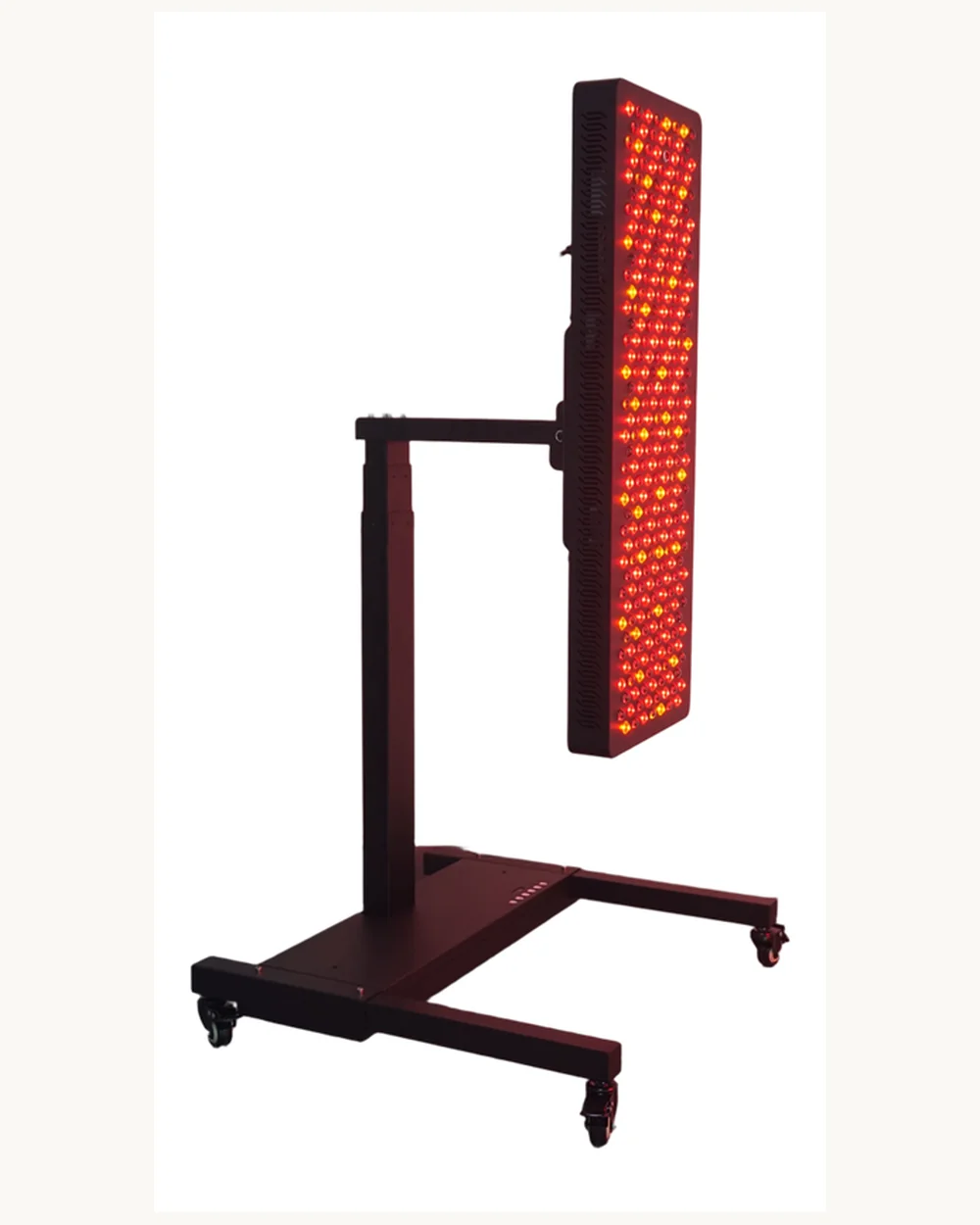
The same eight-wavelength spectrum in a targeted format, for a single area rather than whole-body coverage. $3,995.99.
Choose the R-100 if you are treating one region — a shoulder, a knee, the face — and the R-1000 if you want the whole body in one session. The spectrum is identical; the difference is surface area and LED count.
| Specification | Measured |
|---|---|
| Wavelengths | 610 · 630 · 660 · 810 · 830 · 850 · 940 · 1060 nm |
| LEDs | 300 single and double-core |
| Dimensions | 35.8″ × 12″ × 2.6″ |
| Weight | 35.27 lb |
| Power input | 100–240 V AC, 50/60 Hz, US plug |
| Cooling | Active, low-noise |
| Warranty | 1 year · 30-day return period |
Power draw for the R-100 is confirmed on request — see the note below.
One figure we are checking
The existing product listing gives the R-100 the same 540 W draw as the R-1000, despite having 300 LEDs against 1,155. That is almost certainly a copied figure rather than a measured one, so we have left it off this page until it is verified rather than repeat a number we do not trust.
The literature
Photobiomodulation has a real body of research and a lot of thin marketing. Here is our read of it. Where studies are limited, we say so — including for wavelengths we sell.
| Wavelength | What the literature reports |
|---|---|
| 610 nm | Orange-red visible. Less studied than the higher red wavelengths. Absorbed by skin, but the well-documented effects begin at 630 nm and above. |
| 630 nm | One of the most studied wavelengths for skin. Associated with collagen production, elasticity and the appearance of fine lines. |
| 660 nm | The classic red therapy wavelength. Absorbed by cytochrome c oxidase in mitochondria, which is the mechanism most of the field rests on. |
| 810 nm | Near-infrared. Penetrates beyond skin into deeper tissue. Studied for circulation and tissue response. |
| 830 nm | Close to 810 nm. Some work suggests marginally deeper penetration and effects on tissue oxygenation. |
| 850 nm | Widely used in near-infrared panels. Studied for recovery and local circulation. |
| 940 nm | Thinly evidenced. Less absorbed by melanin and haemoglobin, which may allow deeper reach — but high-quality independent studies are lacking. We include it; we do not claim it is proven. |
| 1060 nm | Emerging. Used in specialised clinical settings. Deep penetration is documented; consumer-device evidence is still developing. |
What we are not claiming
These are general wellness devices, not cleared medical devices. We do not claim they treat arthritis, neuropathy, brain injury, depression, or any other condition, and we do not claim fat reduction or body contouring. Those are cleared-device claims and we have not sought clearance.
If you are managing a medical condition, discuss light therapy with your physician before adding it — particularly if you take photosensitising medication or have a retinal condition.
Using it
Distance
Irradiance falls off sharply with distance. Six to twelve inches is the usual working range; further back means longer sessions for the same dose.
Eyes
Near-infrared is invisible, so brightness is not a guide to exposure. Eye protection is included and should be worn.
Consistency
The literature generally favours shorter, frequent sessions over occasional long ones. More is not linearly better.